

In brief
Current as of 2026-10-23.
- Winter UV is often lower, but exposure varies with location, altitude, snow reflection and time outdoors. Snowy conditions and higher elevations can make protection especially relevant.
- Check the local UV Index and tailor your protection to your plans: sunscreen on exposed skin, clothing, a hat and shade can all work together.
- For dry or sensitive skin, dermatologists quoted by Allure say formulas with moisturizing ingredients may be an option; individual tolerance varies. Follow the sunscreen label and reapply as directed.
What the evidence says

Winter is not a UV-free season. Seasonal changes in the UV Index vary by location and tend to be greater farther from the equator. Exposure also increases at higher altitudes, and snow reflects UV rays that can contribute to sunburn. These factors mean that the weather alone is a poor guide to how much protection you may need.
The UV Index, time outdoors and the amount of skin you leave uncovered are more useful considerations than whether the day feels cold. A dermatologist interviewed by Dermatology Times recommends adapting a year-round plan to your lifestyle, including checking the daily UV Index and combining sunscreen with hats, protective clothing and shade. The same dermatologist notes that some sun-sensitive conditions may worsen with exposure, regardless of the UV Index.
For sunscreen selection, the FDA explains that UV exposure depends on factors including the time of day and geographic location. Broad-spectrum sunscreen protects against both UVA and UVB; SPF primarily indicates protection against sunburn. The FDA recommends broad-spectrum sunscreen with SPF 15 or higher, alongside other protective measures. The American Academy of Dermatology recommends broad-spectrum, water-resistant sunscreen with SPF 30 or higher and notes that UV exposure occurs in winter and on cloudy days. These recommendations have different SPF thresholds; choose a product that meets the guidance relevant to you and follow its label.
Section source: Winter UV Exposure: Why Photoprotection Should Be a Year-Round Conversation. Sunscreen: How to Help Protect Your Skin from the Sun. How to apply sunscreen.
How to use it in a real routine
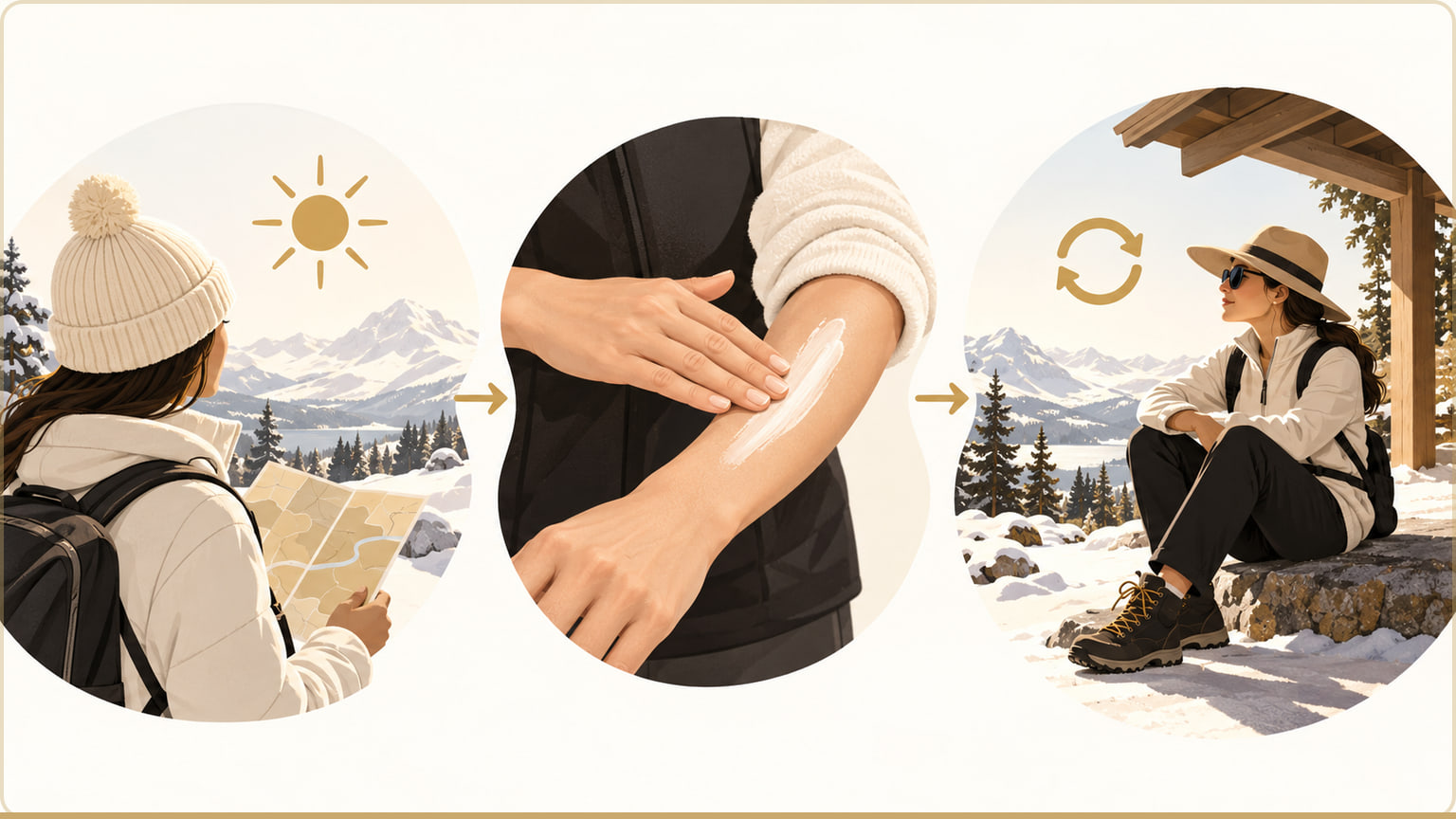
Start with the conditions and your plans, not the season alone. Check the local UV Index, then consider how long you expect to be outdoors, how much skin your clothing leaves exposed, and whether you will be at elevation or around snow. Your needs may differ between a short, mostly indoor day and a day spent skiing or walking outdoors; winter does not make exposed skin irrelevant.
In the morning, apply broad-spectrum sunscreen to the skin that will remain uncovered. For dry or sensitive skin, Allure reports that dermatologists say formulas with moisturizing ingredients such as hyaluronic acid, glycerin, niacinamide and ceramides may be an option. It also describes mineral filters such as zinc oxide and titanium dioxide as generally kinder to sensitive skin. These are selection cues, not a guarantee that any formula will suit everyone.
Section source: 6 Best Sunscreens for Dry Skin That Leave It Glowing.
For time outdoors, apply sunscreen before heading out and reapply according to its directions. The FDA advises applying it 15 minutes before sun exposure and reapplying at least every two hours, more often after swimming or sweating. The AAD also advises reapplying every two hours outdoors and immediately after swimming or sweating. No sunscreen is waterproof, so follow the water-resistance instructions on the product label.
Section source: Sunscreen: How to Help Protect Your Skin from the Sun. How to apply sunscreen.
Make the rest of your plan practical: cover your skin with clothing, wear a hat and seek shade when available. Around reflective snow or at higher altitudes, these additional measures matter alongside sunscreen. Keep sunscreen accessible so reapplication is realistic, especially during longer outdoor plans. For more on choosing a cleanser when cold-weather skin feels dry or sensitive, see How to Choose Body Wash for Dry, Sensitive or Acne-Prone Skin.
Who should be cautious
If you have a condition that worsens with sun exposure, winter does not necessarily remove the concern. The dermatologist interviewed by Dermatology Times notes that symptoms may be affected regardless of the UV Index. Ask your dermatologist or another qualified clinician how to adapt sun protection to your circumstances.
If your skin is dry or sensitive, a formula described as moisturizing or mineral is not automatically suitable for you. Follow the sunscreen label, including its directions for use and reapplication.
Lux Aura Care edit: products that fit this routine
The catalog offers skincare and beauty tools, but it does not identify a sunscreen. These products can be considered for separate steps in your routine; none provides the UV protection discussed here.
Choose sunscreen separately by checking its label for broad-spectrum coverage and a texture your skin tolerates.
- Consider the Resin Body Gua Sha Lymph Tool when the routine involves body massage, body-care routines or massage technique. Check the product instructions and introduce one change at a time.
- Consider the 24K Gold Collagen Eye Patches when the routine involves under-eye hydration, temporary de-puffing or spa-style care. Check the product instructions and introduce one change at a time.
- Consider the Clear Skin Hydrocolloid Patches when the routine involves blemish care, skin picking or simple overnight routines. Check the product instructions and introduce one change at a time.
- Consider the Exfoliating Spa Body Brush when the routine involves shower exfoliation and hard-to-reach body care. Check the product instructions and introduce one change at a time.
Conclusion
Winter sun protection is best tailored to your location, outdoor plans and exposed skin. Check the local UV Index, use a sunscreen that suits your skin, and combine it with clothing, a hat and shade when practical. Reapply according to the product directions, especially during extended time outdoors.
FAQ
Do I need sunscreen on a cloudy winter day?
The AAD notes that UV exposure occurs on cloudy days as well as in winter. Consider the local UV Index, your time outdoors and exposed skin when deciding how to protect yourself.
What kind of sunscreen may suit dry or sensitive skin?
Dermatologists quoted by Allure say that moisturizing ingredients such as glycerin, hyaluronic acid, niacinamide or ceramides may be an option. Mineral filters may also be an option for sensitive skin; individual tolerance varies.
Does snow change winter sun protection?
Yes. Snow reflects UV and can contribute to sunburn, while exposure also increases at higher altitudes. Use sunscreen on exposed skin and combine it with clothing, a hat and shade where practical.
Sources
- Winter UV Exposure: Why Photoprotection Should Be a Year-Round Conversation
- 6 Best Sunscreens for Dry Skin That Leave It Glowing
- Sunscreen: How to Help Protect Your Skin from the Sun
- How to apply sunscreen
- A Guide to the UV Index
This is general educational content, not medical advice.