

In brief
Current as of 2026-10-07.
- The clearest picture of what happens to skin under genuine medical stress comes from people managing serious health conditions, not from a passing trend.
- Chemotherapy patients and people with chronic hand eczema (CHE) sit at opposite ends of dermatology, yet the clinicians managing both groups converge on the same starting point: calm and protect the barrier before introducing anything active.
- Skin changes are a common, and often under-discussed, side effect of cancer treatment.
What the evidence says: when skin barriers break down

The clearest picture of what happens to skin under genuine medical stress comes from people managing serious health conditions, not from a passing trend. Chemotherapy patients and people with chronic hand eczema (CHE) sit at opposite ends of dermatology, yet the clinicians managing both groups converge on the same starting point: calm and protect the barrier before introducing anything active.
Skin changes are a common, and often under-discussed, side effect of cancer treatment. According to Dr. Nicola Clayton, Consultant Dermatologist at The Medical Chambers Kensington in the UK, chemotherapy and other cancer treatments commonly cause skin changes including dryness, sensitivity, itching, flushing, rashes, and changes in pigmentation, and in some cases numbness or skin breakdown (see the Cosmetics Business report).
Chronic hand eczema shows a parallel pattern, backed by more recent survey data. In a cross-sectional survey of 301 employed adults with CHE treated within the Duke University Health System, sponsored by LEO Pharma and presented as posters at the Fall Clinical Dermatology Conference held October 8–11, 2026, in Las Vegas, overall work impairment attributable to the condition was 31.8% over the previous seven days, and 11.0% of patients had changed jobs or work roles because of it. More than half of respondents washed or sanitized their hands at least ten times on a typical workday, and 42.2% believed their hand eczema was caused or worsened by their workplace or occupation — pointing to repeated water and irritant exposure as a key trigger for barrier breakdown. Quality of life stayed impaired for many patients despite routine care: the mean Dermatology Life Quality Index score was 6.7 out of 30, and among the 71.8% of patients who had used only topical corticosteroids, just 15.7% reported that their skin had cleared.
Section source: Chronic Hand Eczema Linked to Lost Productivity and Lower Quality of Life - Dermatology Times.
This burden was significant enough to anchor a dedicated research program: LEO Pharma announced it would present eight posters on chronic hand eczema at the 2026 Fall Clinical Dermatology Conference, including disparities research showing a greater disease burden among patients with higher Monk Skin Tone Scale values, alongside real-world treatment-pattern and work-impact data (see the BioSpace announcement).
How to use it in a real routine
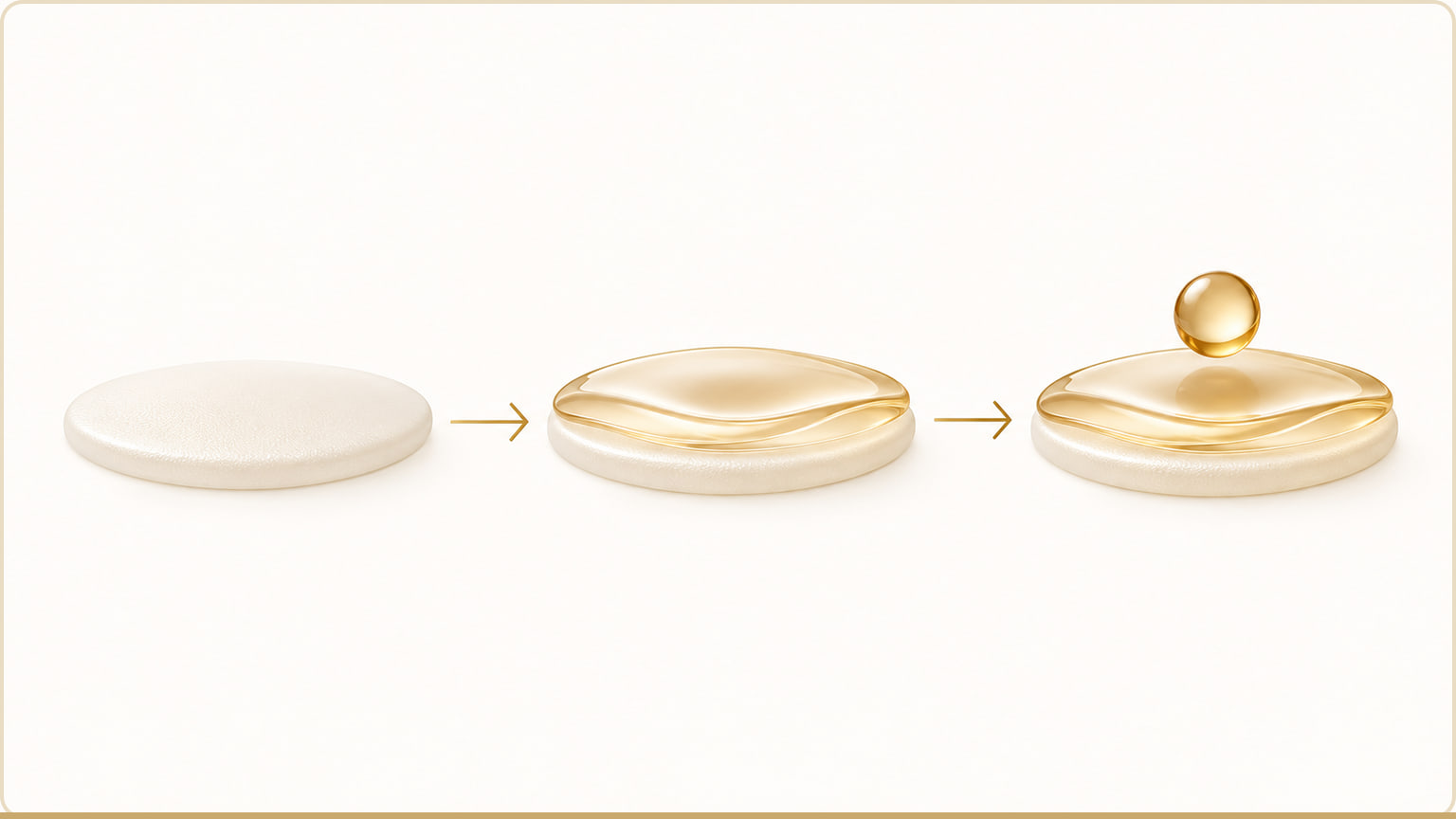
Translating ultra-sensitive-skin lessons into an everyday routine does not mean copying a medical protocol — it means borrowing the underlying logic: fewer steps, fewer potential irritants, and consistent barrier support, rather than cycling through new products hoping one will calm reactive skin.
Start with cleansing. A fragrance-free, soap-free cleanser used with lukewarm rather than hot water removes one obvious source of daily irritation; the CHE research above is a useful reminder that frequent washing itself is a recognized occupational trigger for many people, not just a hygiene afterthought. Pat skin dry rather than rubbing it, then apply a fragrance-free, barrier-supporting moisturizer within a few minutes, while skin is still slightly damp, to help it settle. An overnight, leave-on step such as the centella collagen sleep masks can work well here as an occasional addition after cleansing, not instead of a regular moisturizer — patch-test any new product on a small area first and follow the pack instructions, especially if skin is currently irritated.
During any period of visible sensitivity, dryness, or stinging, it is worth temporarily dropping exfoliants, fragranced products, and strong actives altogether, and rebuilding the routine gradually once skin has settled. Daytime sun protection is worth keeping in the routine even when everything else is pared back, since sun-exposed, already-sensitive skin tends to react more easily.
Who should be cautious

A minimal, barrier-first routine is not a substitute for medical care, and some tools and ingredients that suit calm skin are worth pausing — or discussing with a professional first — when skin is actively reactive, broken, or linked to a diagnosed condition.
Vitamin C and retinoid formulas, such as a vitamin C retinol serum duo, are designed for skin that is already tolerating a routine well. Introducing them during a flare, on broken skin, or without a patch test first can add irritation rather than resolve it, and anyone pregnant, breastfeeding, or using a prescription retinoid should check with a pharmacist or dermatologist before adding an over-the-counter retinol product.
Exfoliation works against a barrier-first approach while skin is reactive. Tools such as an exfoliating spa body brush are best kept for skin that is already calm and comfortable, not used on inflamed, cracked, or broken skin, and should be paused entirely during a flare.
Facial massage tools, including a gua sha jade roller set, are designed for smooth, intact skin. They are not a treatment for a medical skin condition, should not be used over active rashes, broken skin, or areas of numbness or altered sensation, and are worth setting aside during a flare or after checking with a clinician if sensitivity has a diagnosed cause.
Persistent hand or body eczema, skin changes during cancer treatment, or any reaction that does not settle with a simpler routine within a few weeks is worth raising with a GP, dermatologist, or oncology team, since over-the-counter products are not designed to treat these conditions.
Lux Aura Care edit: products that fit this routine
None of the following are medical treatments, and none are designed for chemotherapy-related skin changes or diagnosed eczema — they are formulated for the same minimal, barrier-first philosophy this guide describes, for skin that tends to react rather than tolerate everything.
| Routine step | Product | Why it fits |
|---|---|---|
| Gentle, low-friction cleansing | Natural bristle spa brush | A simple option for the cleansing step — use gently, and skip during a flare if skin feels sensitive to texture |
| Eye-area care without actives | Gold eye patches | A targeted add-on for the eye area that sits outside the actives routine |
The overnight mask mentioned earlier in this guide fits the same logic: an occasional leave-on layer rather than a daily active. As with any new product, follow the instructions on the pack and patch-test on a small area first, particularly if skin is currently feeling tight, flushed, or unusually reactive.
Conclusion
The skincare developed for chemotherapy patients and people living with chronic hand eczema is a reminder that under real barrier stress, less is more: calm, fragrance-free cleansing and consistent moisturizing appear to matter more for a stressed barrier than an ever-expanding product shelf. For everyday sensitive or reactive skin, the same logic applies at a gentler level — pause actives and exfoliation when skin is unsettled, and let a simple routine do the repair work before adding anything new. If skin stays reactive despite a minimal approach, that is a signal to involve a GP or dermatologist rather than more products.
Related reading: Face Rollers and Gua Sha: What the Evidence Really Supports and Vitamin C, Retinol and Under-Eye Care: A Realistic Routine.
FAQ
Can I copy the exact routine used for chemotherapy patients or chronic hand eczema?
No — these are medical conditions managed by clinicians, and products for them are chosen as part of a treatment plan. What everyday sensitive skin can borrow is the underlying principle: fewer products, no fragrance, no exfoliation during sensitivity, and consistent barrier support, not a specific protocol.
Why does frequent hand washing matter for skin that isn't eczema-prone?
The research described above found that frequent washing and sanitizing were common occupational triggers for people with chronic hand eczema, and many linked their condition to workplace exposure. The same pattern — repeated exposure to water and irritants wearing down barrier function over time — is a reasonable reason to be more deliberate about washing frequency even without a formal eczema diagnosis.
Is it safe to use a gua sha tool or retinol serum on sensitive skin?
Only on calm, intact skin, and only after a patch test. Avoid both during an active flare, on broken or irritated skin, or without following the product's instructions, and check with a dermatologist first if sensitivity is linked to a diagnosed condition.
Sources
- Skin and body care products meeting the needs of chemotherapy patients - Cosmetics Business
- Chronic Hand Eczema Linked to Lost Productivity and Lower Quality of Life - Dermatology Times
- LEO Pharma to Present 21 Posters Across Chronic Hand Eczema, Generalized Pustular Psoriasis, Atopic Dermatitis and Pyoderma Gangrenosum at the 2026 Fall Clinical Dermatology Conference - BioSpace
This article was prepared with the support of AI tools and reviewed against the public sources listed above. It is general educational content, not medical advice.
Zmiany: nowy tytuł odwołujący się do obu źródeł dowodów; data "Current as of" przesunięta na 2026-10-13; usunięto niepopartą tezę o "evidence for a barrier-first approach" (zamiast "dowodu" — "obraz tego, co dzieje się ze skórą"); usunięto zdanie o kolejności zajmowania się skutkami ubocznymi na wizytach klinicznych; rozdzielono mycie rąk i 15,7% wyleczeń na dwa niezależne wnioski ankietowe; zmiękczono "outperform" na niekategoryczne "appear to matter more"; usunięto twierdzenie o szczotce jako "non-exfoliating"/"without friction", zastępując je ostrzeżeniem zgodnym z resztą artykułu.