
In brief
Current as of 2026-10-05.
- Facial rollers and gua sha can change how skin and soft tissue look and feel immediately after massage, but the strongest evidence supports modest, local effects rather than a permanent lift.
- A 2025 randomized trial found measurable changes after eight weeks, yet its small sample and lack of a no-massage control mean the results should be treated as promising, not definitive.
- The safest routine is simple: clean tool, enough slip, light pressure, short sessions, and no massage over irritated, injured, infected, or recently treated skin.
What the research actually shows
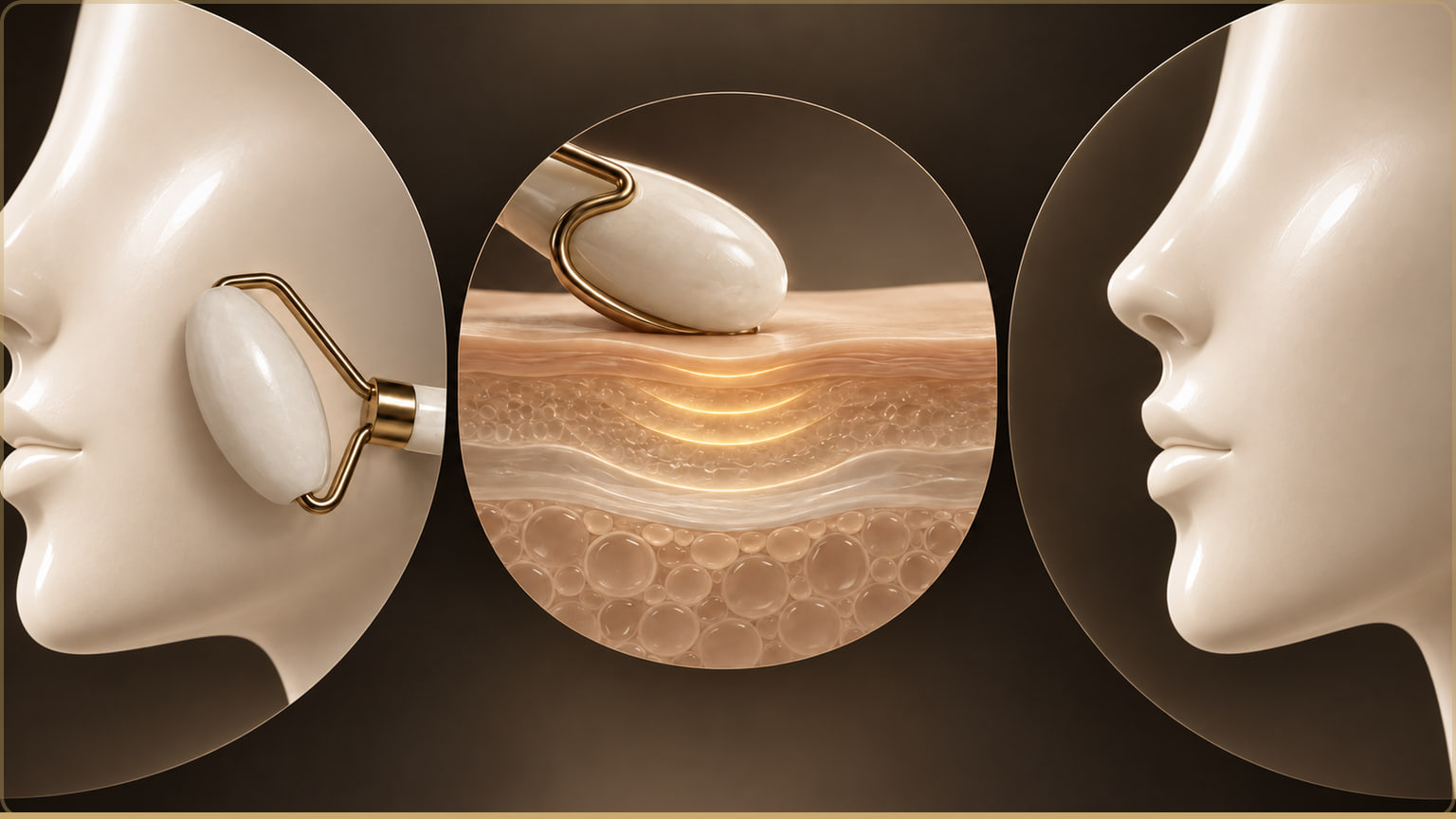
The evidence is more interesting than the social-media slogans, but also much narrower. A small 2018 study tested a facial roller in two experiments. Five minutes of rolling increased blood flow in the treated cheek for at least ten minutes in 12 participants. In a separate group of 14 participants, five weeks of daily use changed the treated cheek's vascular response to heat. That is evidence of a local physiological response. It is not evidence that a roller permanently reshapes the face, removes fat, or rebuilds collagen.
A 2025 randomized trial offers the most direct comparison between a roller and gua sha. Thirty-four women aged 20 to 50 were assigned to one of the two tools and followed a ten-minute routine five times per week for eight weeks. Both groups recorded small changes in facial measurements. The gua sha group showed larger changes in measured muscle tone, while the roller group showed larger changes in two skin-elasticity measures. The study used objective instruments, which is a strength. However, it had only two active groups, no untreated control, a narrow participant group, and no long follow-up. We therefore cannot tell how much of the change exceeded ordinary variation, whether the results apply broadly, or how long they lasted.
The most useful reality check comes from a 2025 systematic review. It included 12 studies and 321 women across facial exercise, myofunctional therapy, and manual massage. Some studies reported localized improvements around the cheeks, jawline, or eyes, but protocols and outcome measures differed substantially. The reviewers concluded that the current evidence is still insufficient to establish dependable rejuvenation effects. Taken together, the research supports massage as a low-risk beauty ritual with possible short-term and localized benefits—not as a substitute for medical treatment or an evidence-based facelift.
Evidence note: See the 2025 roller-versus-gua-sha trial, the 2025 systematic review of mechanical facial rejuvenation, and the facial-roller blood-flow study record.
Roller, gua sha, cooling, or vibration?
The best tool is the one that helps you use gentle, repeatable pressure. Material mythology matters less than a smooth edge, comfortable grip, easy cleaning, and a routine your skin tolerates.
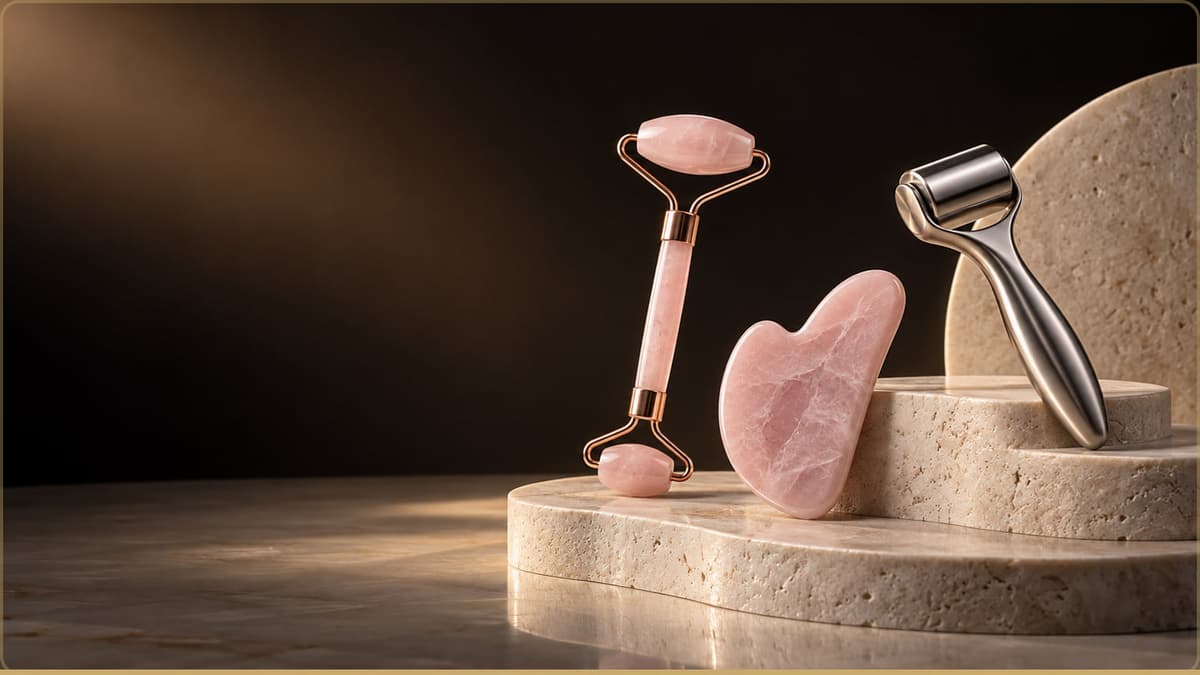
A roller distributes pressure across a moving cylinder, making it the easiest starting point for people who tend to press too hard. A Rose Quartz Gua Sha and Jade Roller Set lets you compare rolling with a flatter tool without buying separate kits. The roller is well suited to quick, even passes; the gua sha side gives more control over angle and contact area.
Gua sha asks for more technique. Keep the tool nearly flat rather than digging an edge into the skin, add enough slip, and move slowly. The Lux Aura Face Roller and Gua Sha Set is a practical beginner option when you want both formats in one routine. More pressure is not more effective. Pain, persistent redness, or visible bruising is a stop signal.
Cooling tools can feel especially pleasant in the morning. The Ice Face Roller and Gua Sha Steel Set offers a cool surface and easy-clean material. Cooling may temporarily reduce the sensation or appearance of puffiness, but it should not be sold as fat loss or structural contouring. Avoid extreme cold, and never hold a chilled tool motionless against one spot.
A powered tool changes the experience rather than the evidence category. The Vibro-Glow Face Massager may suit someone who prefers steady movement with less manual effort. Treat vibration as massage, not as a medical or energy-based skin-tightening procedure. Use the lowest comfortable setting and follow the product instructions.
A low-friction five-minute routine
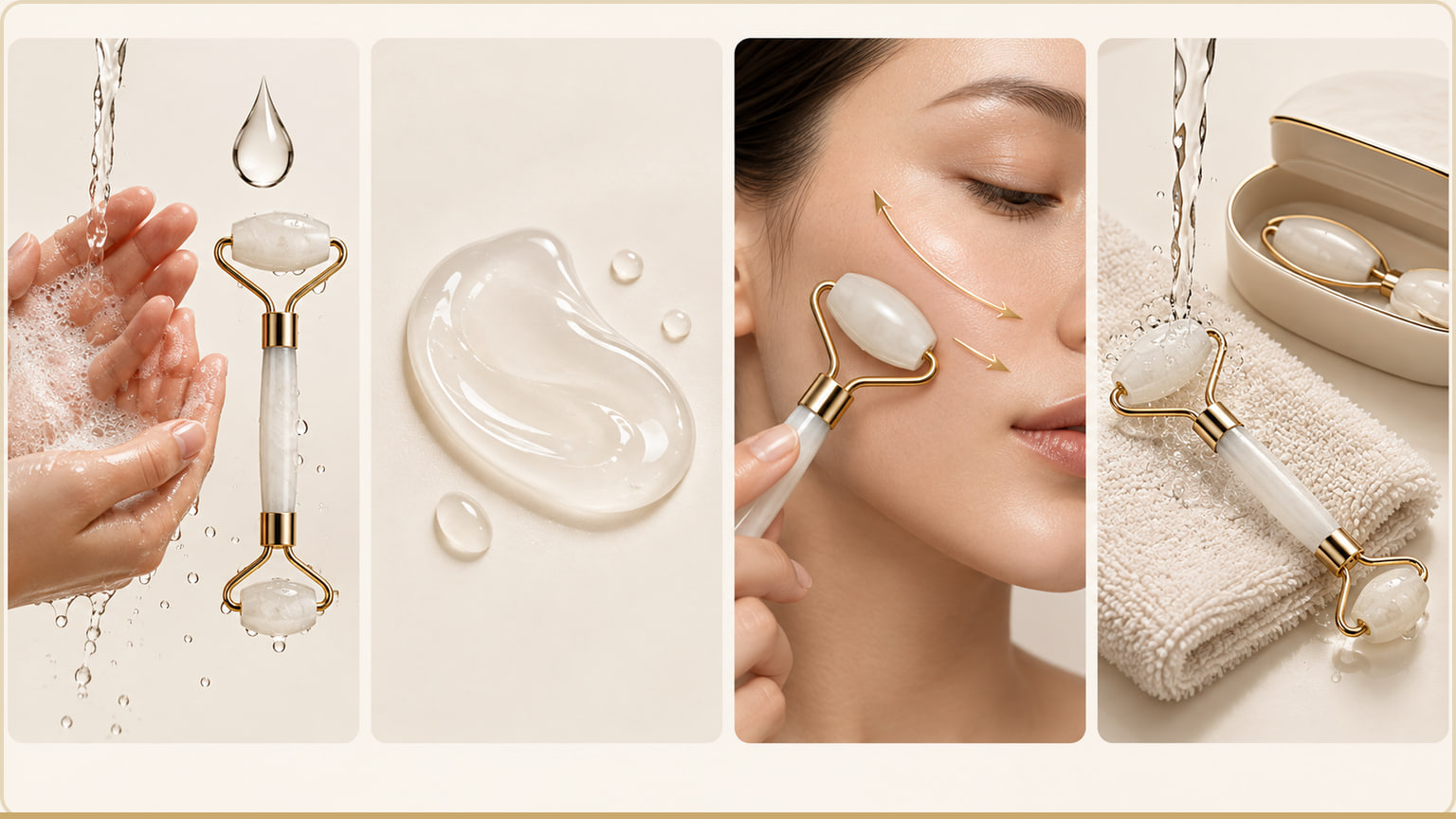
Start with clean hands, a clean face, and a clean, undamaged tool. Apply a simple moisturizer, gel, or facial oil that gives enough glide for the tool to move without pulling. If a product stings when applied normally, it is a poor choice under massage. Strong exfoliating acids, prescription treatments, and retinoids may become more irritating when rubbed repeatedly, so keep the massage step separate when your skin is sensitive.
Use feather-light pressure around the eyes and light pressure elsewhere. Begin at the center of the face and make slow outward passes across the cheeks. Along the jaw, glide from the chin toward the ear without sawing back and forth. On the forehead, work from the center toward the temples. Two or three passes per area are enough for a five-minute routine. The tool should glide; the skin should not bunch, drag, or blanch under force.
Consistency matters more than duration. The eight-week trial used ten-minute sessions five times weekly, but that research protocol is not a universal prescription. A shorter routine that leaves the barrier calm is better than an ambitious schedule that causes irritation. Afterward, rinse or clean the tool according to its material, dry it completely, and store it where edges cannot chip. Finish with moisturizer and use sunscreen during the day.
When to skip the tool
Do not massage over sunburn, open cuts, cold sores, infected areas, active dermatitis, or a rosacea flare. Be cautious over inflamed acne: pressure and repeated passes can hurt, rupture lesions, and spread residue across the face. Stop if the skin becomes painful, hot, markedly red, bruised, or more swollen.
Ask the treating clinician when it is safe to resume after injectables, laser treatment, microneedling, facial surgery, dental surgery, or another procedure. People who bruise easily, have a bleeding disorder, take anticoagulants, or have altered facial sensation should seek individualized advice before applying a pressure tool. Do not stop prescribed medication for a beauty routine.
Hygiene is part of performance. Do not share a facial tool unless it can be appropriately disinfected between users. Replace chipped stone or damaged metal, because a rough edge can scratch the barrier. The American Academy of Dermatology notes that cosmetic treatments carry risks and that a board-certified dermatologist can help assess options and complications. That principle matters whenever a beauty concern may actually be a skin condition.
Safety note: The American Academy of Dermatology's cosmetic safety guidance is a useful starting point when deciding whether an at-home ritual is appropriate or professional advice is needed.
How to choose without overbuying
Choose around behavior, not extravagant claims. If you are new to facial massage or rush in the morning, start with a roller because it naturally moderates pressure. If you enjoy a slower evening ritual and are willing to learn the angle, choose gua sha. If cooling is the main appeal, steel is practical. If hand fatigue makes manual massage inconsistent, a powered massager may be easier.
One versatile tool is enough. You do not need a collection of stones for different “energies,” and no credible study shows that rose quartz, jade, or a particular color creates a unique biological effect. Shape, finish, hygiene, and technique are more important. Pair the tool with an uncomplicated slip product you already tolerate rather than buying an aggressive active solely for the massage step.
Set the right success measure. A useful tool should make the routine pleasant, avoid irritation, and perhaps leave the face looking temporarily fresher or feeling less tense. If you expect permanent sculpting, erased wrinkles, or detoxification, the product is being asked to do something the evidence does not establish. Honest expectations protect both your skin and your budget.
FAQ
Can gua sha permanently sculpt the jawline?
Current research does not establish permanent sculpting. Small studies have measured short-term or localized changes after repeated routines, but the evidence cannot separate every effect from fluid shifts, muscle relaxation, measurement variation, or natural change. Any dramatic permanent-lift promise goes beyond the data.
Can I use a facial roller every day?
Many people can tolerate a short, gentle daily routine, but frequency should follow the skin's response. Reduce use if you see persistent redness, tenderness, dryness, or breakouts. There is no prize for matching a study schedule if your barrier is unhappy.
What should I apply before massage?
Use a bland product that provides glide and that you already know your skin tolerates. A simple moisturizer, hydrating gel, or facial oil may work. Avoid using the tool to force an irritating active into the skin, and do not massage directly over a reaction.
Does facial massage “drain toxins”?
“Detox” is not a useful scientific description of what a beauty tool does. Gentle massage may temporarily move superficial fluid and change local blood flow, which can alter how puffiness looks. Your liver, kidneys, lungs, and lymphatic system perform the body's actual waste-processing functions.
Sources
- Comparative Effects of Facial Roller and Gua Sha Massage: randomized controlled trial
- Efficacy of Conservative Techniques for Mechanical Facial Rejuvenation: systematic review
- Short- and long-term effects of a facial massage roller on skin blood flow
- American Academy of Dermatology: cosmetic safety
This article is educational and does not replace individual medical advice. It was prepared with AI assistance and reviewed against the public sources listed above.