
In brief
Current as of 2026-10-14.
- A small randomized trial found measurable changes in facial contour after eight weeks of using a facial roller or gua sha. It does not establish permanent facial reshaping.
- A review of online information found that many claimed benefits of gua sha, jade rollers, and facial massage had little research support.
- Cold may temporarily reduce puffiness. Keep ice moving and avoid prolonged contact with one spot.
What the evidence says
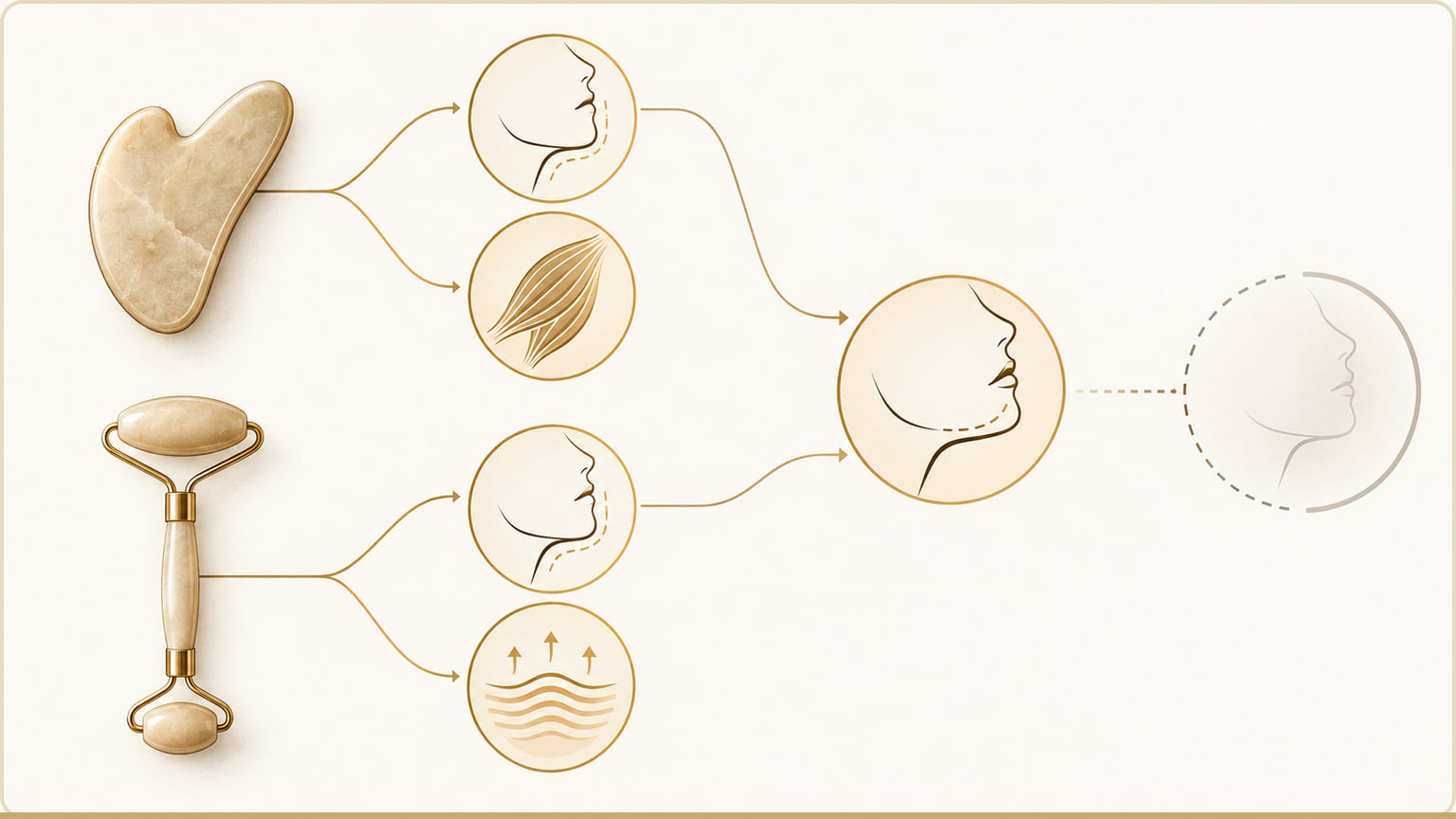
The evidence is limited. A randomized trial assigned 34 women to use either a facial roller or gua sha for 10 minutes, five times weekly, over eight weeks. Both groups had measurable changes in facial contour measurements. The gua sha group also showed changes in muscle-tone measures, while the roller group showed changes in skin-elasticity measures. The study compared the two tools over a limited period; it does not establish that either tool permanently reshapes the face. Read the randomized trial record.
The study’s results should be read in the context of its design. It involved 34 women and two specific routines carried out over eight weeks. Its measurements describe changes observed during that study period. They do not establish what would happen with a different tool, a different schedule, or longer-term use. Nor do they show that a change in a measurement will be noticeable to every user. The trial compared the tools; it did not establish that either is a treatment for a medical condition.
The two groups also had different measured outcomes. Gua sha was associated with changes in muscle-tone measures, and the roller group showed changes in skin-elasticity measures. Both groups showed changes in contour measurements. These findings are specific to the outcomes measured in the trial. They do not justify broad promises about lifting, wrinkle reversal, or lasting changes to facial shape.
A review of online information about gua sha, jade rollers, and facial massage found that many claimed benefits had little research support. It also identified bruising, infection risk, and skin irritation among potential risks commonly mentioned. The review reports that only 30% of the websites it examined acknowledged potential risks described in the literature, including contact dermatitis, minor burns, and infection. The review is about online information and the research it discusses; it is a reason to read cosmetic claims carefully and keep expectations modest. Read the review.
That evidence gap matters when interpreting strong claims about facial tools. A product description or online post may suggest a lasting change, but the supplied evidence does not establish permanent reshaping or wrinkle reversal. A short-term measurement change in one small trial is not the same as proof of a lasting cosmetic result.
Facial icing has a narrower, temporary use: cold may reduce puffiness for a short time. That is a temporary cosmetic effect, not evidence of lasting changes to facial structure. Cleveland Clinic’s guidance on facial icing recommends protecting skin from direct, prolonged contact with ice.
How to use it in a real routine
For a roller or gua sha, keep the pressure light and the movements slow and controlled. Think of the tool as part of a brief massage routine, rather than a way to force a lift or change your facial shape. Stop if the tool tugs, hurts, or leaves your skin irritated.
A vibrating massager adds movement, but the supplied evidence does not establish that vibration produces lasting cosmetic or medical benefits. If you choose to use one, keep contact gentle, follow the product’s instructions, and avoid pressing it against irritated skin. These are practical precautions; they are not evidence that vibration improves skin or facial contours.
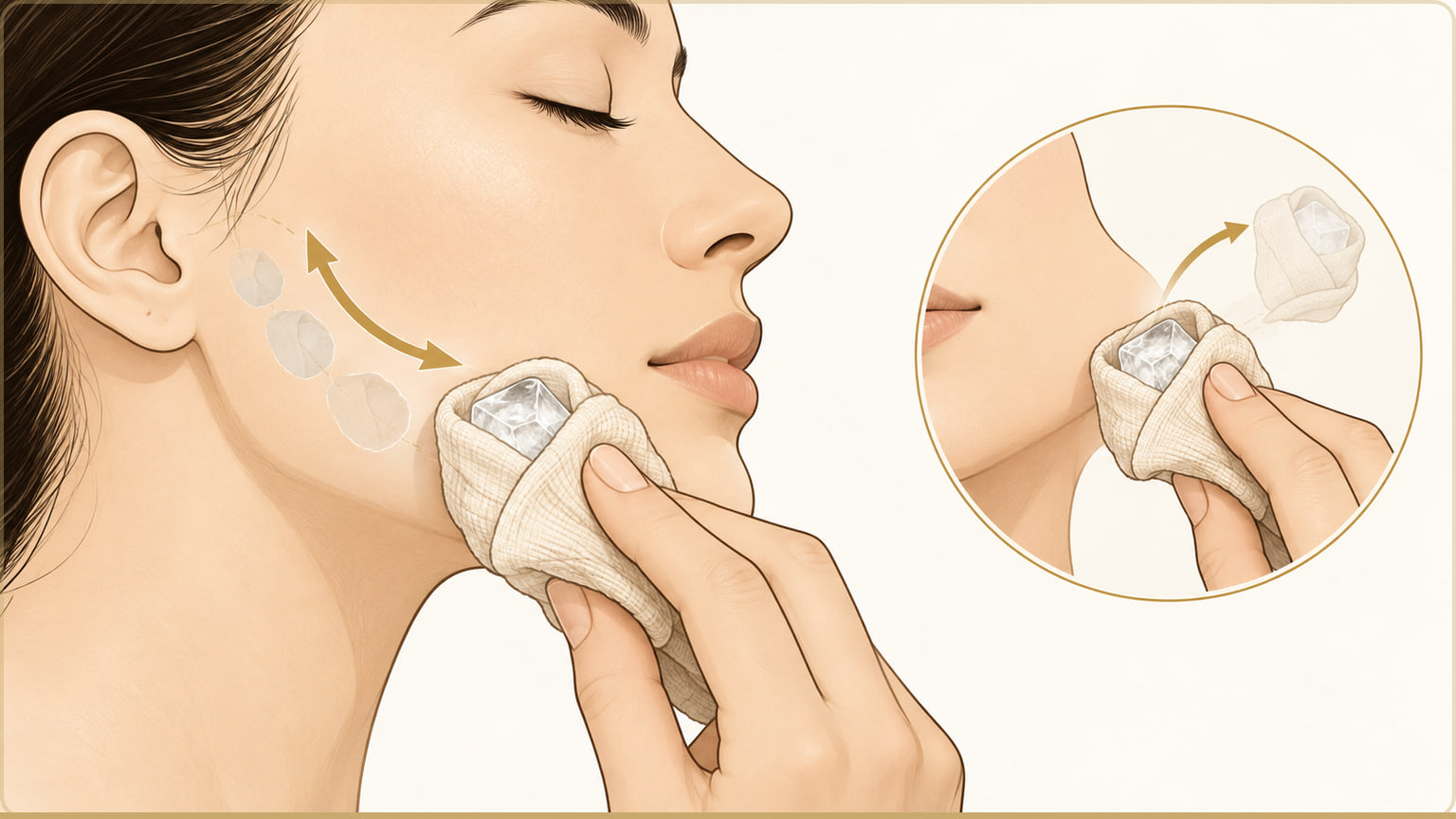
For facial icing, Cleveland Clinic advises wrapping ice in a thin cloth and using light movements. Keep the ice moving and do not leave it resting on one area. Prolonged contact can irritate the skin, cause redness, or lead to frostbite. The suggested effect is temporary reduction in puffiness, not a long-term fix for facial shape or other skin concerns.
There is no need to use a tool every day or follow an intensive schedule to create a soothing routine. The trial’s schedule—10 minutes, five times weekly, for eight weeks—was the protocol used to compare the two tools. It is not a general-use recommendation, and the trial does not show that more frequent or longer use would produce better results.
A comfortable routine should remain comfortable. Use only enough pressure to move the tool gently over the skin, and stop if you notice pain or irritation. The review’s findings about reported risks are another reason not to treat harder pressure or more frequent use as a shortcut to better results.
Who should be cautious
People with rosacea should avoid rubbing, scrubbing, or massaging their skin. The American Academy of Dermatology says irritation can contribute to rosacea flares. That advice applies to facial massage, including use of rollers or gua sha. Read the AAD’s rosacea skin-care tips.
The review of online information about gua sha, jade rollers, and facial massage identifies bruising, infection risk, and skin irritation among potential risks. It also reports that contact dermatitis and minor burns are among risks described in the literature. These risks do not mean every user will experience a problem, but they are relevant when considering claims that a tool is harmless for everyone. Read the review’s discussion of potential risks.
For facial icing, Cleveland Clinic cautions against leaving ice on the skin because prolonged contact can cause irritation, redness, or frostbite. Wrapping ice in a thin cloth and using light movement helps avoid direct, prolonged contact. The source also notes that icing may temporarily reduce puffiness; it is not a cure-all or a long-term fix.
Lux Aura Care edit: products that fit this routine
The supplied product paths do not provide details about materials, ingredients, contents, or clinical performance. Check each listing for product details and instructions. A product’s inclusion here should not be read as evidence that it can permanently reshape the face or treat a skin condition.
- Consider the Ice Face Roller & Gua Sha Steel Set if you are looking for a tool for a cooling facial massage routine. Check the product instructions and introduce one change at a time.
- Consider the Lux Aura Face Roller & Gua Sha Set if you are looking for a facial roller and gua sha set for a beginner routine. Check the product instructions and introduce one change at a time.
- Consider the Rose Quartz Gua Sha & Jade Roller Set if you are looking for tools to use in a facial massage routine. Check the product instructions and introduce one change at a time.
- Consider the Vibro-Glow Face Massager if you are looking for a vibrating facial massage tool. The supplied evidence does not establish lasting cosmetic or medical benefits from vibration. Check the product instructions and introduce one change at a time.
Conclusion
Facial massage tools can be part of a brief routine, but the evidence does not establish permanent facial reshaping. One small trial found changes in measurements after eight weeks of using a roller or gua sha; a review found that many online benefit claims had little research support. Cold may temporarily reduce puffiness. Keep pressure light, avoid prolonged contact with ice, and stop if your skin becomes irritated. People with rosacea should avoid rubbing, scrubbing, or massaging their skin.
FAQ
Can gua sha or a face roller permanently reshape the face?
The trial found changes in facial contour measurements during its eight-week study period. It does not establish permanent reshaping, so treat claims of lasting changes to facial shape cautiously.
Can an ice roller reduce morning puffiness?
Cold may temporarily reduce puffiness. Cleveland Clinic advises wrapping ice in a thin cloth, using light movements, and avoiding prolonged contact with one spot. Stop if your skin becomes irritated.
Should I use a facial massager if I have rosacea?
The American Academy of Dermatology advises people with rosacea to avoid rubbing, scrubbing, or massaging their skin because irritation can contribute to flares.
Sources
- Comparative effects of facial roller and gua sha massage on facial contour, muscle tone, and skin elasticity: randomized controlled trial
- Gua-sha, Jade Roller, and Facial Massage: Are there benefits within dermatology?
- Facial Icing: Is Ice Good for Your Face?
- 7 rosacea skin care tips dermatologists recommend
This article was prepared with the support of AI tools and reviewed against the public sources listed above. It is general educational content, not medical advice.